

China to Build 100+ Automated Berths for 10,000-DWT Ships
2026-11-05 14:09:14
Click:
“
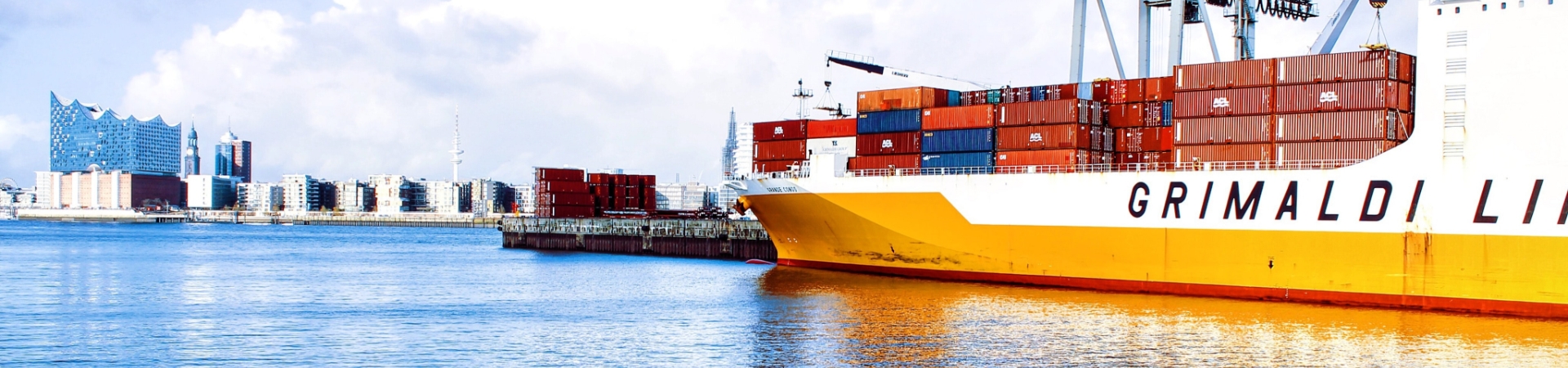
Under the 15th Five-Year Plan, China will add about 2,500 km of high-grade waterways and more than 100 automated berths for 10,000-DWT-plus vessels. It now runs 60 automated terminals, and by 2030 automated terminals are expected to exceed 90 while large berths pass 3,500.
”

Image: CNSS
China to Add 100-Plus Automated Terminal Berths for 10,000-DWT-Plus Ships Under 15th Five-Year Plan
Standfirst: The National Development and Reform Commission (NDRC) said at a November 4 briefing that China will add about 2,500 km of national high-grade waterways and more than 100 automated terminal berths for vessels of 10,000 DWT and above during the 15th Five-Year Plan period (2026–2030).
1. What the policy says
On November 4 the NDRC held the second session of its "Advancing the 15th Five-Year Plan" press conference series, themed "Strengthening Development Support" (both titles are unofficial translations), and set out its plans for a modern infrastructure system it describes as advanced and applicable, systematically complete, resource-efficient, safe and green — built "moderately ahead of demand, but not excessively so."
For waterway transport, the targets are:
- around 2,500 km of new national high-grade waterways;
- more than 100 new automated terminal berths of 10,000 DWT and above;
- a modern waterway transport system basically in place by the end of the period.
Supporting works named in the briefing include: strengthening the shipping services, industrial support and resource-allocation capacity of the world-class port clusters in the Bohai Rim, the Yangtze River Delta and the Guangdong–Hong Kong–Macao area; optimising the bulk-cargo functions of major ports; improving connectivity across the inland waterway system; systematically raising the navigability of the Yangtze main stem; steadily removing navigation bottlenecks on key inter-provincial waterways; building a world-class Shanghai International Shipping Centre; developing the southeast coastal and Beibu Gulf port clusters; and building the new Three Gorges waterway channel.
2. A note on the unit: berths, not terminals
The official Chinese phrase is 自动化码头泊位 — literally "automated terminal berths", meaning berths at automated terminals. It is a berth count, not a terminal count, and many secondary reports have collapsed the two. The gap is real and wide: the 60 automated terminals now in service take in 217 berths of 10,000 DWT and above. Where a Chinese text says 泊位 (berth), the English must not say terminal, and vice versa.
3. The starting point
China now operates 60 automated terminals, 30 of them automated container terminals — about 27% of the global total — accommodating 217 berths of 10,000 DWT and above. Nationwide, the country has 3,061 berths of 10,000 DWT and above, 469 of which were added during the 14th Five-Year Plan period; high-grade waterways total 18,500 km, 2,500 km of them added over the same period — the same distance China now intends to add again in five years.
The Ministry of Transport expects that by the end of the 15th Five-Year Plan period automated terminals will exceed 90, involving more than 350 berths of 10,000 DWT and above, with core production processes largely unmanned on site and a number of "ten-million-TEU-class" and "100-million-tonne-class" digital-intelligent port areas in operation.
4. Why the acceleration
Scale is the first driver. In 2025 China's ports handled 18.3 billion tonnes of cargo and 354 million TEU of containers, both the highest in the world — an average of more than 50 million tonnes of cargo and 970,000 TEU a day.
Efficiency is the second. Yangshan Phase IV in Shanghai, the world's largest automated container terminal, achieves handling efficiency more than 10% higher than a conventional terminal; Qingdao Port's digital upgrade raised throughput capacity per 100 metres of quay line by 30%, and the port has broken its own handling-efficiency world record 13 times. The average port stay for international container ships at major coastal ports is 1.7 days, 0.64 days shorter than at major foreign ports.
The targets also sit inside a wider programme: by 2030 the Ministry of Transport aims to have built 25,000 km of digital-intelligent transport corridors and 35,000 km of zero-carbon transport corridors, with automated terminals as key nodes.
Author:
GUANGZHOU RONGXIN LOGISTICS CO., LTD
0
-

Tentative Labour Deal Averts Strike Threat at LA and Long Beach Ports
-
1,810 Containers Backlogged! Road Haulage Disruption at Cochin Port ICTT Terminal Lasts Nearly Two Weeks; Clearance Resumes on November
-
Renewed Dispute over Darwin Port Lease | Landbridge Issues Statement Denying Sale Negotiations
-
New International Liner Service Launched at Nansha Automated Terminal in Guangzhou, Optimizing Export Transshipment for the Western Pearl River Delta
-
NYK Launches the World’s First Vessel with Ammonia-Fueled Main and Auxiliary Engines, Marking a Critical Step for Shipping Decarbonization
-
Red Sea Risk Escalation | Jeddah Port Placed Under Strike Warning, Berthing Risks Surgeate



SHARE
Quick Links
Quick Links
Quick Links
ceo@rongxin.cn.com
+86 020-81635220/ +86 020-81635220
Room 1604,16 / F, Fortune Building, 152 Xiwan Road, Liwan District, Guangzhou

GUANGZHOU RONGXIN LOGISTICS CO., LTD
ceo@rongxin.cn.com
+86 020-81635220/ +86 020-81635220
Office 203A-2, Tairong Business Center, 63 Xizeng Road, Liwan District, China

点击右上角
分享给朋友吧
©2022 GUANGZHOU RONGXIN LOGISTICS CO., LTD
